WHAT IS FLOOD-MAR?
A natural solution with wide-ranging benefits.
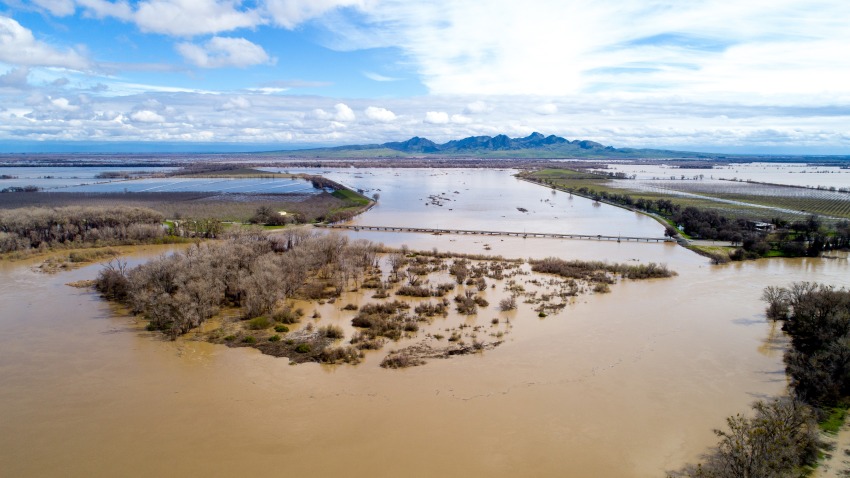
Flood-MAR (Flood-Managed Aquifer Recharge) is an approach that captures and redirects excess water from high-flow events or intentional on-farm flooding onto agricultural lands, working landscapes, and managed natural areas so it can soak into the ground and replenish underground aquifers.
By putting floodwater to work, Flood-MAR helps strengthen California’s water resilience. It can improve groundwater supplies, support rivers and groundwater-dependent ecosystems, reduce flood risk, sustain agricultural productivity, and provide a range of additional environmental and community benefits.
As California faces increasingly intense floods, prolonged droughts, and other climate-driven extremes, Flood-MAR offers an important adaptation strategy that helps communities prepare for an uncertain water future.
Successful, large-scale implementation of Flood-MAR depends on collaboration and equitable partnerships among communities, landowners, Tribes, water managers, researchers, nonprofits, and public agencies working together toward shared water management goals.
That’s where the Flood-MAR Network comes in.
Multiple benefits. one approach.
Flood-MAR can help address some of California’s most pressing water management challenges. While benefits vary by location, Flood-MAR projects can provide advantages for communities, agriculture, ecosystems, and water managers alike.
flood risk reduction
drought preparedness
ecosystem protection & enhancement
drinking water supply reliability
subsidence mitigation
water quality improvement
working landscape stewardship
climate adaptation
recreation & public access
flood-mar is happening across california.
From agricultural recharge projects in the Central Valley to habitat-focused efforts in managed natural landscapes, Flood-MAR is already being tested and implemented throughout California. Learn more about Flood-MAR in California Department of Water Resources’ White Paper and Research & Data Development Plan.
Putting Flood-MAR into practice.
Flood-MAR implementation looks different across California. Could Flood-MAR work for you? The answer depends on many factors, including local hydrology, soils, crop type, groundwater conditions, infrastructure, water availability, regulatory considerations, and project objectives.
To help practitioners move from concept to implementation, the Flood-MAR Network develops practical guidance, tools, and resources informed by real-world experience and collaborative research.
How to Estimate Flood-MAR Recharge Fact Sheet (2025)
Developed by the Flood-MAR Network’s Estimating Recharge Action Team, this fact sheet provides practical methods for estimating groundwater recharge from on-farm and Flood-MAR projects. The guidance includes simple water budget approaches, flow measurement methods, and direct infiltration measurement techniques, along with field examples and implementation considerations.
Best for: Landowners, Groundwater Sustainability Agencies, water managers, consultants, and project practitioners
Crop Health Guidance Series (2026)
Protecting crop health during on-farm recharge.
Just released by the FloodMAR Network’s Crop Health Action Team, these 2-page guidance sheets help growers conduct on-farm recharge while protecting their crop’s health. Choose your crop: Alfalfa | Almonds | Annual Crops | Pasture | Pistachios | Vineyards | Walnuts
Best for: Growers, GSAs, consultants, and project practitioners
Research priorities for scaling Flood-MAR.
Widespread implementation of Flood-MAR depends on continued scientific research, innovation, and collaboration. The Flood-MAR Research and Data Development Plan identified thirteen priority topic areas:
Water Systems
- Hydrology Observation & Prediction
- Reservoir Operations
- Infrastructure Conveyance & Hydraulics
- Recharge & Extraction Methods
Land & Agriculture
- Crop System Suitability
- Soils, Geology & Aquifer Characterization
- Land Use Planning & Management
Environmental Systems
- Water Quality
- Terrestrial, Riparian & Aquatic Ecosystems
Communities & Decision Making
- People & Water
- Economic Analysis
- Policies & Legal Considerations
Innovation
- Tool & Application Development
Help Advance Flood-MAR
Whether you're looking to learn, connect, contribute, or stay informed,
there's a place for you in the Network.
Attend an Event
From Lunch-MAR to workshops to Forums, there is always something happening.
Explore Resources
Find research, tools, guides, and case studies to support your work.
Join an Action Team
Collaborate on projects that move Flood-MAR from concept to implementation.
Copyright 2022-Present | Flood-MAR and Contributing Authors